Good school meals are in jeopardy.
Years of accumulated underfunding are placing the overall quality and outcomes of the provision at a greater risk now than at any point since the introduction of Universal Infant Free School Meals over 12 years ago.
This situation is worsening. We’re currently seeing headteachers and business managers facing impossible decisions between resources and provision.
Meals on a shoestring
Increasingly, school meals catering – particularly in the primary sector – is falling victim, not just to its own funding challenges, but also to the increasing pressures within the whole school budget. In some cases, this is leading to compromises being made in quality and standards.
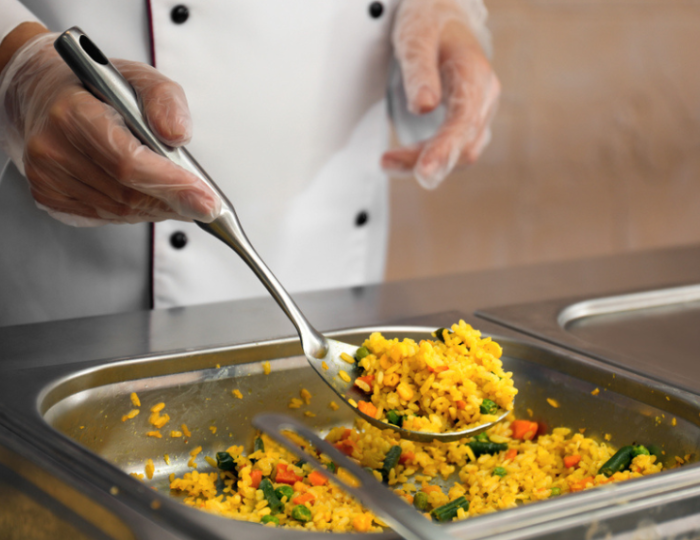
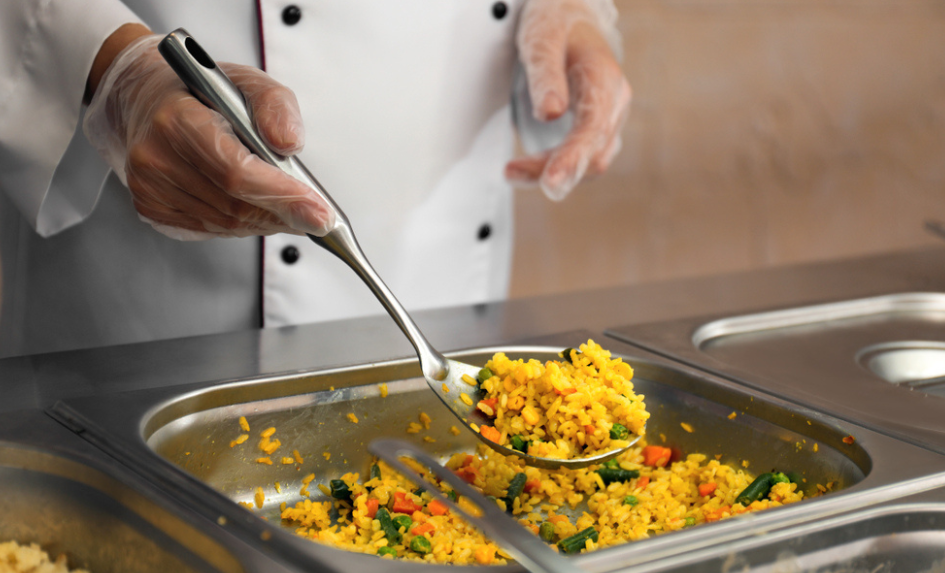
One of most worrying and obvious ways this is happening is the move away from scratch cooking towards fully bought in and either microwaved or reheated (regen) meals. Whilst most of us may accept or enjoy a supermarket ready-meal from time to time, we certainly wouldn’t want to be eating them every day. Yet this is a sad reality now facing some primary-age pupils.
For pupils where this may be the main meal of the day, that’s 570 reheated meals forming the core part of their nutrition from Reception through to the end of Year 2. And it will be many more meals for those entitled to FSM throughout Key Stage 2.
Why quality matters
It can be tempting for schools to seek the cheapest possible solution in the face of significant financial pressures, but the potential impacts of these choices can be far-reaching.
With the enhancement to School Food Standards phasing in from September 2027, the Government’s intention is that standards are increased and children’s health and wellbeing improvements flow from that. Of course, this is only achievable if meals are appealing and actually taken up.
School meals provision in England is therefore facing a forked path. One route ends in a fragmented landscape, with winners and losers dictated by school size and buying power. The other leads to a collective mindset around good food for growing minds.
There are a few key points to consider when reviewing or tendering your catering service.
1. Is any change reversible?
Would it be very hard or costly to reintroduce real cooked meals if the changes don’t go to plan? Some caterers radically change the team structure required, losing valuable cook skills in the process.
2. Is your equipment going to be changed?
Does the caterer own the replacement equipment? Some service models strip out valuable catering equipment and replace it with caterer-owned specialist equipment. If that caterer then leaves, the school can be left with nothing.
3. Does the offer tie your school into a very specific model or approach?
Once you have made the switch you could be tied into a particular model or caterer. This will make it very difficult for the school to retain flexibility and negotiating power when it comes to contract reviews or retenders.
4. Does the financial model rely on continued uptake of meals at a previous level?
Pupils and parents will vote with their feet – if meal quality drops, then uptake will likely drop, which may impact funding the school can access or revenue from paid meals.
5. Do you know what you’re actually getting?
Some caterers focus on initiatives or ‘added value’ proposals which score quality points but in reality, schools may struggle to find the time or resource to activate fully. Think about asking specific questions about the things that matter to you.
For example, if that is quality and ingredients, you may be interested to know that the current, and incoming, school food standards make no distinction about key ingredient welfare standards.
In the eyes of the standards, all chicken is equal – as an ingredient and a source of nutrition. In reality, the cheapest chicken available on the market is imported thousands of miles, and is cheap because of lower welfare conditions and heavy use of antibiotics during growth. British Red Tractor chicken meets much higher welfare standards.
If details like this are not specified, or not asked, you should be aware of where savings in meal price are likely to come from.
The power of a good meal
The meals service can be a vibrant and engaging part of the school day, where pupils can learn about and try varied, quality nutritious foods. The school environment, if done right, can act as a real aid to parents in familiarising and broadening their child’s horizons and palette in relation to building a good food ‘relationship’.
This complements the range of topics and learning that children are immersed in from an academic perspective.
Children who opt out of school meals because they’re ‘boring’ or poor quality will lose access to a great opportunity to experience a range of dishes and flavours. That lack of exposure can have a lasting impact far beyond their school years.
Packed lunch alternatives undeniably vary in quality, but even the most dedicated parent is unlikely to be able to produce a varied three-week rotating ‘menu’. Variations on ‘a sandwich, crisps and a snack’ will not provide the same broad introduction to food at a key stage of development as school meals can.
Looking around
Peer pressure is also a factor in children’s relationship with food.
It’s an uplifting sight to see a whole dining hall tucking into a healthy range of school dinners from that day’s menu. Schools looking to maximise uptake often see a compounding effect where more and more pupils engage with the provision because their peers are; and the pool of pupils bringing packed lunches gets smaller and smaller.
Picking the right route
There is a positive path, where caterers and school leaders can work closely together to maximise uptake. This can form a core part of a whole school approach to good food, and is particularly applicable for free meals, where high levels can more easily be achieved.
An uptake of free meals in excess of 90% is routinely possible, and can lead to better core meal pricing for schools if done right. This is better than obtaining a lower price driven by reductions in portion size, standards or staffing that may have unintended consequences.
A short-term saving on price at tender, can rapidly unwind if uptake drops and the reality of the service does not match the expectation.
Simply does it
In some ways, education catering is not complex. Cheaper meals are produced from cheaper ingredients and less labour resource. Good quality meals, as part of a sustainable service, require a commitment – not a major one, but a commitment nonetheless – to not accept the cheapest possible provision.
With continued demographic challenges facing primary schools intakes, a high-quality meal service can be a real draw for prospective parents. A saving on catering costs might seem appealing in isolation, but the funding impact of losing just one or two pupils to a different school, with an active and well-run kitchen, may well eliminate any short-term savings achieved from switching to a low-cost, low quality meal provision.
There is a saying that ‘the kitchen is the heart of the home’. But I believe the same can be true in a school, where children are re-fuelled and re-energised at the mid-point of the day. We would surely all want that heart to be strong and vibrant.
Jolyon Adam is Finance Director at HCL, a leading contract caterer specialising in school meals and education catering. Headquartered in Hertfordshire and operating all over the UK, the company serves millions of primary and secondary school meals each year aligned with government standards, providing fresh, balanced, and locally sourced meals.