An active school isn’t simply a school with a high-quality PE timetable and a few teachers throwing in the odd brain break.
It’s a school where movement is built into the rhythm of the day, the heartbeat of the school, running through lessons and breaktimes, PE, enrichment, and the wider culture of the place.
Active schools – getting the ball rolling
For senior leaders, the initial challenge is often in convincing your team that physical activity doesn’t just benefit the children. It creates a calmer, more focused environment for everyone to teach and learn in.
The even harder part is making activity consistent, manageable, and inclusive, without it becoming yet another initiative that piles pressure onto staff.
My advice is to start with five connected areas: mindset, active learning, structured play, high-quality PE, and activity before and after school.
Together, they form a practical framework for reviewing what already happens in your school and deciding what you’d like to improve next.
1. Build the mindset first
When I work with teachers (and over 25 years of delivery, that’s been many thousands of them), I find there are two types. Those who are happy to try new approaches to learning, and those who need a bit more convincing.
In my presentations, I always start with how activity affects the brain in children. If that doesn’t grab their attention, I’m not sure what will.
Regular physical activity supports the brain in several ways:
- Clears brain fog: Increased blood flow delivers more oxygen and nutrients to the brain, helping pupils think more clearly and focus for longer.
- Improves mood and motivation, fast: Physical activity triggers the release of serotonin, dopamine and noradrenaline, helping children feel more positive, alert and ready to learn.
- Improves behaviour and concentration: Pupils return to learning calmer, more settled and better able to manage their attention.
- Builds a brain that’s ready to learn: Exercise increases BDNF, a protein that helps brain cells grow, connect and strengthen. Over time, it acts like fertiliser for the brain.
- Strengthens memory and recall: Regular activity supports the hippocampus, the part of the brain closely linked to learning, memory and retaining new information.
This is the bit that always finds its mark, when delegates start to realise that activity shouldn’t be treated as a treat. It should be the heartbeat running through the day.
Activity is brilliant for focus, mood and behaviour, and it saves so much time on behaviour management further down the line. It’s a teaching tool, not just one more thing to squeeze in.
If movement is seen as an optional extra, it will always depend on a handful of enthusiastic staff. But if it’s understood as part of teaching, learning, wellbeing and personal development, it’s far more likely to stick.
Maintain clarity
Senior leaders can help by setting a clear expectation that activity is part of the whole school day, not something that only happens in PE.
It also helps to build a small team with clear roles. This might include:
- a senior leader who gives the work visible support
- a PE lead or active-school lead who coordinates it
- a small group of teacher ambassadors who test ideas and share what works
- pupils who contribute ideas and feedback
- teaching assistants and lunchtime staff, who often have a huge influence on daily activity
Avoid launching everything at once. Start with a few classes or year groups, gather feedback, and let early wins build confidence.
Here’s a simple message that tends to win people over: Two to three minutes of activity every 90 minutes buys you 15 extra minutes of learning time.
Staff are always more likely to change their practice once they’ve seen an approach work in a classroom like theirs.
2. Make movement part of learning
Active learning doesn’t mean turning every lesson into a fitness session. It means using movement where it genuinely helps pupils engage, remember, respond or refocus.
An easy way to start is with short activity breaks. Two to five minutes of movement between tasks can help pupils reset, especially after a long stretch of concentration.
These can happen right behind chairs and don’t need equipment or a big space. The imoves Active Blasts are a great example.
Active schools – more than just movement
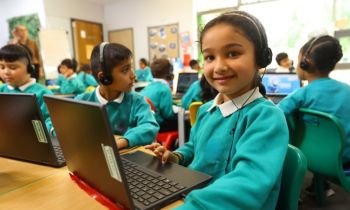
The next step is connecting movement to the learning itself. For example, the imoves active learning library uses these approaches:
- pupils stand for one answer and crouch for another (choose between)
- actions represent vocabulary, punctuation or steps in a process (word action games)
- questions are placed around the room as a learning circuit (circuits)
- pupils collect information from different locations (data collection)
- a short movement sequence opens or closes a lesson (top and tail)
- partners walk and talk before returning to record their ideas (discovery)
One of the easiest techniques to start with is a ‘choose between’ activity. Ask a question and give pupils two movements to show their answer. Every child responds at the same time, and you get an instant read on their understanding.
Movement should support the learning objective, not compete with it. Ten random star jumps will just create chaos and break the momentum of the session.
Start with one technique, use it regularly. And give staff and pupils time to get comfortable with a different way of working.
Pinpoint strategies
The Top and Tail method is especially effective because it’s so straightforward. For example, an active quiz/game or an active blast to open the session, then a celebration of learning to close it. No extra prep required.
I’ve worked with schools that have gone further with ideas like No Chairs Tuesday, where children learn through movement all day. The pupils were unsure at first, but loved it by the end.
I love this kind of thinking. It might not work everywhere, but it’s a great spark for ideas that do fit your school and your children.
3. Rethink break and lunchtime
Breaktimes are often assumed to be naturally active. Sadly, that’s not the case for every child.
Some pupils spend the whole break chatting, watching, or standing at the edge of a game. Others avoid activity altogether because the playground feels too competitive, too noisy, or too unstructured.
Practicalities
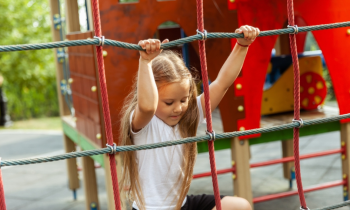
A more active playground doesn’t need an expensive redesign, or a big expensive climbing frame where only three children are allowed on at a time in a clockwise direction because of safety. A waste of money and space, in my opinion.
Schools can divide the space into zones using cones, signs or markings. I’ve seen some great examples, including:
- a ball-games zone
- a dance or music zone
- a creative-play area
- a circuit or fitness zone
- a walking or running route
- a quieter movement space
The aim isn’t to turn every child into a sportsperson. It’s to give pupils different ways to enjoy moving, in their own way.
Get everyone involved
Pupil voice is also so important here. Ask children which activities they’d use, which parts of the playground they avoid, and what would help them join in.
Lunchtime staff need support too. Their role isn’t to lead a workout or demonstrate every activity. It’s to feel confident enough to facilitate: setting activities up, explaining simple rules, drawing in hesitant pupils, and keeping everything running safely.
Empowering lunchtime staff is often one of the quickest ways to lift activity levels across a whole school.
4. Protect high-quality PE
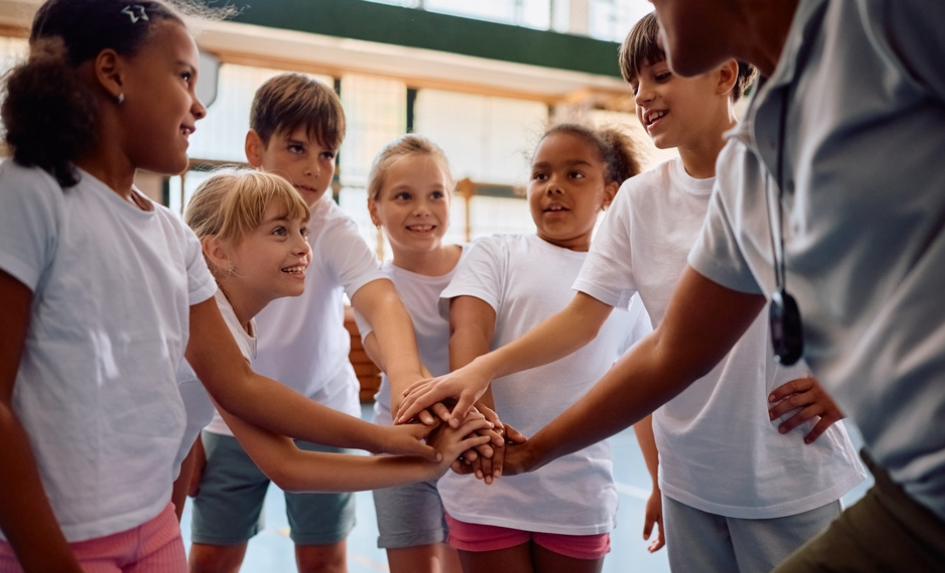
PE remains central to an active school, but having PE on the timetable doesn’t automatically mean an active lesson. Long explanations, large teams and queues for equipment can leave pupils standing around for much of the session.
Using resources that avoid this, like imoves’ holistic PE programme, makes a real difference to engagement, learning and focus. Not to mention the added bonus of building physical literacy, muscular strength and endurance, and cardiovascular fitness.
Review and adjust as necessary
Senior leaders should look closely at the experience pupils are actually having. Are they moving regularly? Are activities inclusive? Do they get enough opportunities to practise? Does the curriculum build knowledge, skill and confidence over time?
Four principles can improve most PE lessons:
- Start with the basic skill.
- Give pupils plenty of opportunities to practise.
- Use small groups and small-sided games.
- Keep the experience positive and enjoyable.
“Let’s play football for six weeks” will only appeal to a small number of children. “Let’s play invasion games” [that build physical literacy, communication skills and resilience] is a much better way to build those skills for everyone.
Smaller groups mean less waiting, and more chances for each pupil to handle a ball, perform a movement, or make a decision.
Don’t forget training
Workforce confidence matters just as much. Staff need clear plans, useful demonstrations, and training that helps them teach PE safely and effectively.
The imoves PE programme is well known for its child-facing videos, which support both teacher and child through the trickier parts. Ultimately, teachers just need the confidence to facilitate a high-quality lesson using high-quality resources.
Outside specialists can absolutely add value, but schools should be careful not to end up with teachers as bystanders. Building the confidence of your own staff creates far more consistency, and it carries movement well beyond the PE lesson too.
5. Extend activity beyond the timetable
Before- and after-school activity can reach pupils in a different way, but only if the offer is broad enough.
A programme built mainly around traditional team sports may suit some pupils brilliantly while repeatedly missing others.
Consider a mix of activities, such as dance, circuits, running or walking, Pilates or yoga-style movement cycling, scooters or wheeled activities, creative movement, non-competitive fitness, and sport-and-music combinations.
Senior leaders should look at who attends, not just how many clubs are on offer.
Which children join several activities? Which children never attend? Are cost, transport, confidence, kit, or prior experience creating barriers?
Look beyond the school gate
Active travel can play a role here too. Walking, cycling or scooting to school won’t be possible for every family, but schools can promote it where practical, exploring ideas like park-and-stride routes or walking buses.
Try setting up a Wheelie Club first thing in the morning, where children can use their wheels to ‘bomb’ around the playground before school starts.
In one school I worked with, Wheelie Wednesday became so popular they ended up running a wheelie club every single morning. They had small ramps and a boogie-box outside to enhance the experience. Practically zero expense and loads of fun.
6. Audit the whole school day
Before introducing anything new, carry out a simple activity audit. Look across the whole week and consider what pupils actually experience:
- before school
- during morning lessons
- at break time
- afternoon lessons
- at lunchtime
- in PE
- after school
Then rate each of the five areas using a red, amber, green system:
- Red: needs attention
- Amber: developing
- Green: established
This gives senior leaders a much clearer picture than simply counting PE hours or listing clubs.
It might reveal that one year group uses active learning confidently while another doesn’t. Or it might show that the playground works well for confident footballers but for few others. It could also highlight that good practice depends too heavily on one or two particular members of staff.
Activity in action
One school, which is now a genuinely active school, started its journey with a staff meeting where the team simply brainstormed ways to get the school moving.
They focused in using the talent already in the staffroom, like runners, dancers, tennis players, all enthusiastic about something specific. Their ideas became the bedrock of the transformation, because it came from the teachers themselves, not a directive from above.
Choose two or three priorities rather than trying to improve everything at once.
Final thoughts: Use a phased approach
Long-term change is far more likely when it’s introduced gradually. A practical sequence might look like this:
- Plan: Carry out the audit, identify priorities, and involve pupils and staff.
- Launch: Introduce one or two simple routines, such as daily movement breaks and structured playground zones.
- Embed: Give staff time to share successes, solve problems, and build movement into normal practice using their own ideas.
- Review: Revisit the audit and look at what’s actually changed for pupils, not just what’s been introduced.
Useful evidence to track might include staff confidence, pupil participation, engagement after movement breaks, playground use, and consistency of practice across year groups.
The strongest active schools aren’t always the ones with the most equipment or the biggest budget. They’re the ones that make movement simple, regular and inclusive.
My advice isn’t to add another initiative. It’s to create a school day where every child has more opportunities to move, learn and enjoy themselves, while ticking the enrichment framework box too. The Creating an Active School guide offers a practical audit, examples and ideas to help schools and trusts begin that process.
Imogen Buxton-Pickles is Founder and CEO of imoves Active Education Ltd. For more information on any of the points discussed here, or to trial the imoves active schools programme, email ImogenBP@imoves.com.